
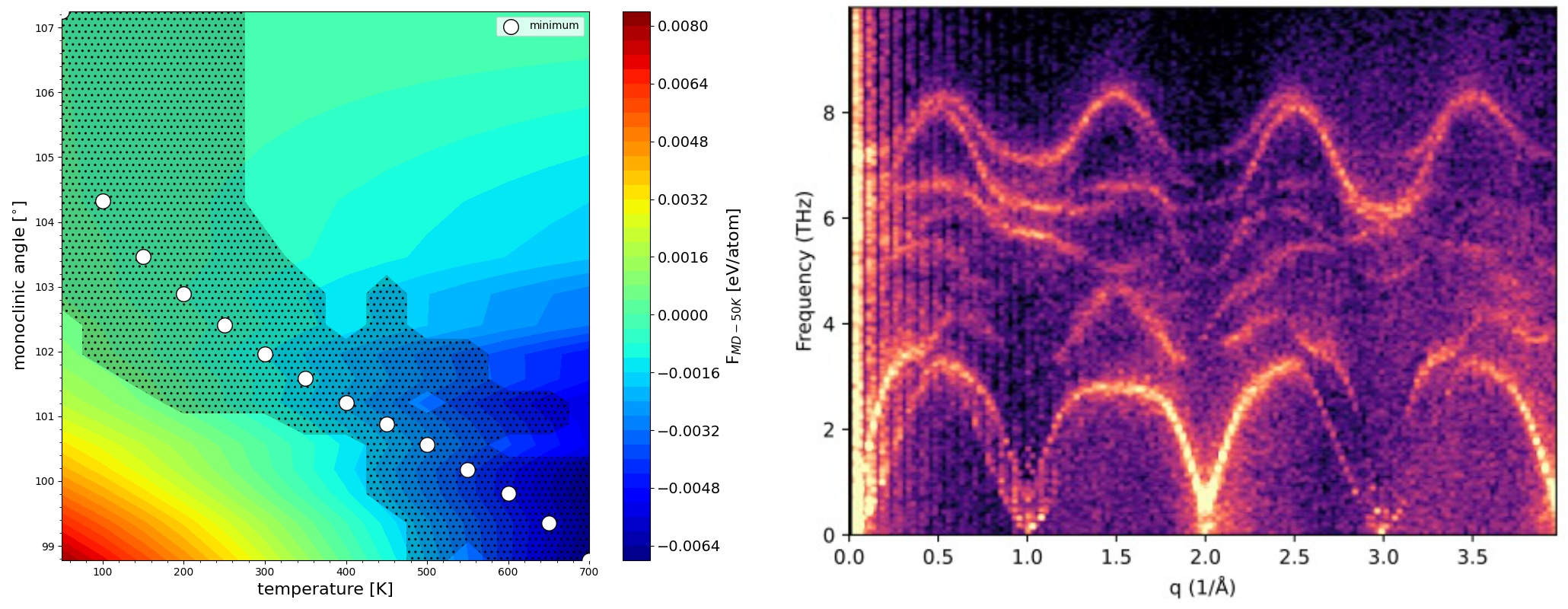
Abstract: Computer simulations of solids have traditionally been limited either by the size of the system that can be modeled or by the accuracy of the underlying physical model. Recent advances in machine-learning-based force fields offer a way to overcome this limitation by combining high accuracy with simulations of large systems. In this talk, we will introduce the main challenges in developing machine-learning interatomic potentials and discuss how these models can be applied in practice. As an example, we will present a neural-network-based interatomic potential developed for NiTi, a widely used shape memory alloy. The model enables efficient simulations of structural and mechanical behavior at finite temperatures, providing new insight into processes that are difficult to access with traditional simulation methods.
Who: Petr Jaroš, Ústav termomechaniky AV ČR, v. v. i.
When: 10:00 a.m. Friday, March 13
Where: The session will be held in person at the Institute of Information Theory and Automation (UTIA), in room 45 (café). For directions to the institute, please refer to the following link: https://zoi.utia.cas.cz/index.php/contact
Language: Czech (if you require English, please let us know in advance)