

ABSTRACT
This workshop addresses the critical transition from binary classification to decision-grade forensic architectures. This direction is supported by emerging research suggesting that forensic models, despite strong benchmarks, may degrade under domain shift and overfit to generator-specific artifacts, reducing real-world reliability. By treating forensic significance as a function of signal integrity, accounting for sensor noise, motion blur, and transcoding artifacts, and cross-source consistency, we bridge the gap between the IEEE Signal Processing Society and the Reliability and Information Fusion communities. The program targets five research pillars: Quality-to-Confidence Modeling (with dynamic evidence weighting and dataset shift), Calibrated Uncertainty (utilizing conformal prediction and proper scoring rules), Multi-Source Evidence Fusion (using evidence graphs), Operational Robustness, and Reliability-Centric Open Evaluation Challenge. The proposal builds on the organizers’ decade-long experience with forensic projects and operational platforms for the Czech Police and European LEAs such as the Police Service of Northern Ireland and the Generalitat de Catalunya. By assembling a TPC with strong EURASIP and IEEE ties, it fosters dialogue between theory and practice and shifts the focus from aggregate accuracy to calibration, proper scoring, and operationally robust, legally defensible solutions. The workshop will host an open evaluation challenge on synthetic image detection and localization of manipulated content, sponsored by ULRI’s Digital Safety Research Institute, using sequestered data with unseen generators and manipulation types to mirror real media-authentication conditions. It will provide a forum for high-performing teams to present approaches.
IMPORTANT DATES
Workshop Date: September 13, 2026
Duration: all day
Paper Submission Deadline: May 20, 2026
Paper Reviews due: June 10, 2026
Paper Rebuttal period: June 11-15, 2026
Paper Acceptance Notification: June 17, 2026
Camera-ready Submission Deadline: July 1, 2026
Author Registration Deadline: July 16, 2026
COMPOSITION
The workshop is structured as a high-impact full-day event. The program opens with a 30-minute keynote, Decision-Grade Forensic Evidence: Technical and Operational Requirements, followed by two focused one-hour Technical Talk Sessions on Robustness Under Real-World Degradation & Dynamic Weighting of Localized Evidence and Uncertainty Quantification & Conformal Prediction for Forensic Reasoning, each featuring three oral presentations. The afternoon begins with a second invited talk and then transitions to an open evaluation challenge on synthetic image detection sponsored by ULRI’s Digital Safety Research Institute, where the organizers introduce the motivation and evaluation protocol, share preliminary findings, and provide a forum for high-performing teams to share their results and technical approaches. Top performers will be announced during the workshop and top teams may also be eligible for follow-on research funding through ULRI’s Digital Safety Research Institute. The day also includes a centralized Poster and Software Demo Session, where researchers present peer-reviewed posters alongside live demonstrations, creating a direct feedback loop between academics and the broader investigative software community. To ensure diversity and ethical integrity, the committee will prioritize a balance of academic and real-world perspectives and career diversity by reserving speaking slots for early-career researchers. We will prioritize detection transparency and responsible disclosure over methods that could serve as guides for forensic evasion. The proposed format ensures well over five in-person presenters by combining six accepted papers, two invited talks, the competition segment, and a dedicated poster & demo session, safeguarding against the conference’s cancellation policy while maintaining a high density of expertise and operational stability for the ICIP 2026 program.
ATTENDEES
40–50. The target audience includes academic researchers in signal processing and computer vision, reliability engineers, and platform integrity professionals, alongside practitioners from the content authenticity community and the specialized sector of investigative software development.
PROMOTION
Please help us promote this workshop on LinkedIn by reposting it: https://www.linkedin.com/feed/update/urn:li:activity:7447590724990337024/
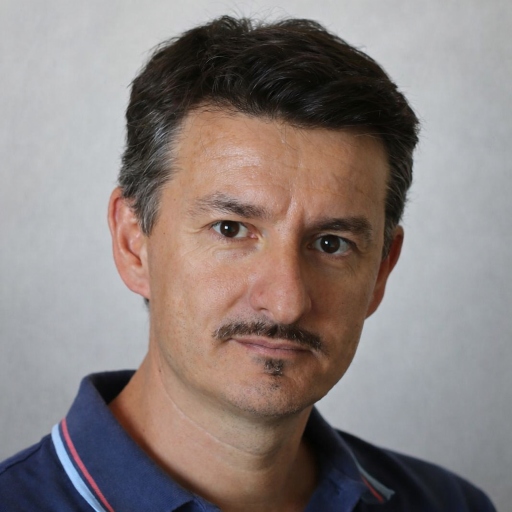
Associate Professor
ALESSANDRO PIVA
is Associate Professor at the Department of Information Engineering of the University of Florence. He is also head of FORLAB – Multimedia Forensics Laboratory of the University of Florence. His research interests lie in the areas of Information Forensics and Security, and of Image and Video Processing. In the first topic, he was interested in data hiding, signal processing in the encrypted domain, image and video forensic techniques. In the second area, he was interested in the design of image and video processing and analysis techniques for Cultural Heritage, medical and industrial applications. In the above research topics he has been co-author of more than 60 papers published in international journals and 120 papers published in international conference proceedings, with h-index 43 according to Scopus. He is IEEE Fellow.
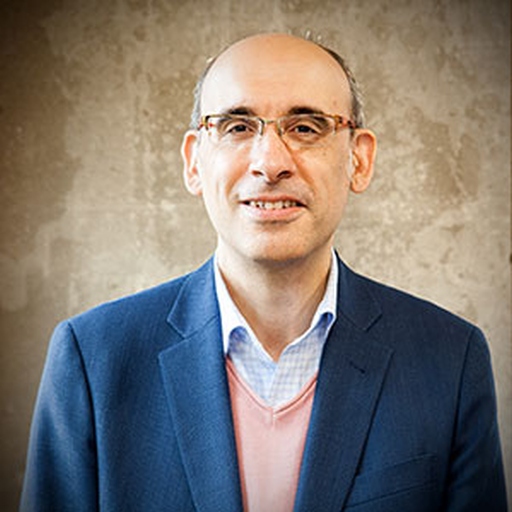
Full Professor
FERNANDO PÉREZ GONZÁLEZ
received a Ph.D. in Telecommunications from the University of Vigo in 1993 and has been a Full Professor at the Department of Signal Theory and Communications since 2000, coordinating the GPSC research group since 1995. From 2009 to 2011, he held the Prince of Asturias Chair at the University of New Mexico and served as Manager of the National Research Plan between 2007 and 2010. He was the promoter and first Managing Director of Gradiant (2007–2014) and founded seven ICT companies, whose surviving firms employ around 150 engineers. He is the author of 65 international journal articles and over 170 conference papers, and has supervised 10 Ph.D. theses. He holds 14 patents, has led numerous European and industrial projects, and has been an IEEE Fellow

Full Professor
GIULIA BOATO
is Full Professor at the University of Trento (Italy) and co-founder of Truebees. Since 2012 she is leading the group within the Media Lab working on multimedia forensics. Her research interests include image and signal processing, with particular attention to multimedia data protection and authentication, data hiding and digital forensics, but also intelligent multidimensional data management and analysis. She has published more than 170 papers in international conferences and journals.

Associate Professor
IRENE AMERINI
is an Associate Professor at Sapienza University of Rome, where she leads the Computer Vision and Multimedia Forensics Research Team at ALCORLab. Irene Amerini received her Ph.D. in Computer Engineering from the University of Florence with a thesis on image forensics, source identification, and tampering detection. She previously held research positions at Sapienza University of Rome and the University of Florence and was a Visiting Research Fellow at Charles Sturt University, Australia. Her research interests include computer vision, adversarial machine learning, and multimedia forensics, and she is actively involved in IEEE, EURASIP, and IAPR technical committees.

Full Professor
CHRISTIAN RIESS
received his Ph.D. in Computer Science from Friedrich-Alexander University Erlangen-Nürnberg in 2012 and completed his habilitation in 2020. He is a senior researcher and head of the Multimedia Security Group at FAU, and currently serves as interim Professor of Applied Cryptography. His research focuses on image and video forensics, machine learning security, and robust image analysis, with strong emphasis on trustworthy and secure AI systems. He has authored a large body of high-impact journal and conference publications and has received over 11,000 citations. His work has been recognized by multiple best paper and reviewer awards, and is contributing to technical committees in IEEE and EURASIP.

Associate Professor
ADAM CZAJKA
received his Ph.D. in Biometrics from the Warsaw University of Technology in 2005 and his habilitation in Computer Science in 2018. He is a tenured Associate Professor at the University of Notre Dame, where he also serves as the founding Director of the AI Trust and Reliability Lab (AITAR). His research focuses on biometrics and trustworthy AI, with particular emphasis on iris recognition, presentation attack detection, and human–machine teaming. He has authored numerous high-impact journal and conference publications, supervised multiple Ph.D. students, and holds several granted and pending U.S. patents. He is the recipient of an NSF CAREER Award and an active member of IEEE and the international biometrics research community.
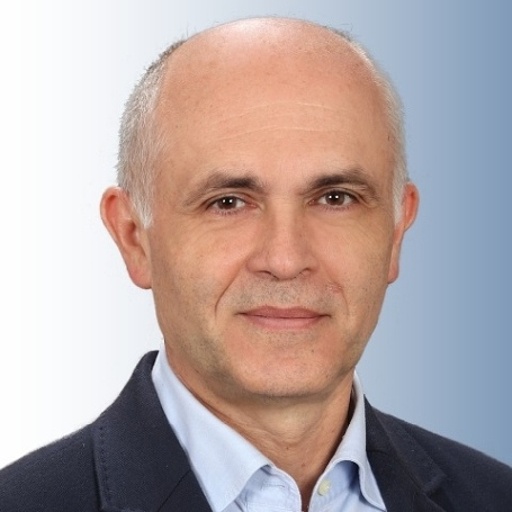
Full Professor
REMUS BRAD
is a Full Professor at Lucian Blaga University of Sibiu, where he is affiliated with the Department of Computer Science and Electrical Engineering. Remus Ovidiu Brad received his Ph.D. in Computer Science from the Technical University of Cluj-Napoca, with research focused on image processing and motion detection, and completed his habilitation in Computer Science and Engineering in 2015. He has held academic positions at ULBS since 1993 and has also served for many years as Director of the University’s IT and Communications Directorate. His research interests include image processing and computer vision, artificial intelligence, computer networks, and embedded systems, with strong engagement in doctoral supervision and academic leadership.
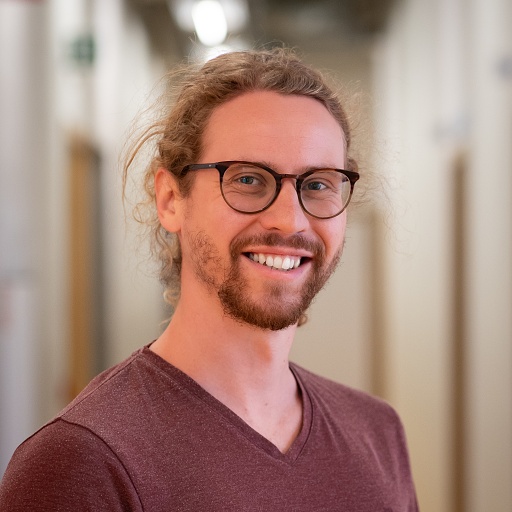
Postdoctoral Researcher
HANNES MAREEN
is a postdoctoral researcher at IDLab‑MEDIA, Ghent University – imec, Belgium. He completed his Bachelor’s, Master’s, and PhD in Computer Science Engineering at the Ghent University in 2014, 2017, and 2021, respectively. Hannes specializes in multimedia forensics, security, compression, and other applications. Within forensics, he has contributed to work on (deep)fake image detection, perceptual hashing, video watermarking, and more. For example, he designed the COM-PRESS image manipulation analysis dashboard for fact‑checkers, the Comprint method for image forgery localization, and the TGIF dataset containing text-guided inpainted images. Beyond research, Hannes is active in science communication and has received several distinctions. For example, he received the best paper award at IEEE GEM 2024, he won the Agoria Prize 2017, two best poster awards, the #ThesisThread 2021 competition, and finished third in the Flemish PhD Cup 2022.
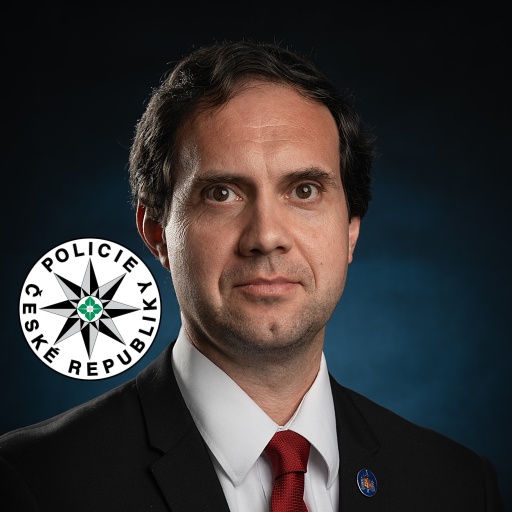
Police of the Czech Republic
JAN HOŘÍNEK
is an Analytics & Information Coordinator at the Police of the Czech Republic, where he focuses on the use of data analytics to support operational and investigative decision-making. Jan Hořínek participated in several international collaborative projects, including the EU Horizon 2020 projects ROXANNE, STARLIGHT, and PRESERVE, as well as the RELIEF project, originally developed within the Czech Police and funded by Swiss funds. The RELIEF platform was subsequently adopted by INTERPOL, for which he continues to provide maintenance and R&D support. He received an Ing. degree in Telecommunications and Radiotechnology from the Faculty of Electrical Engineering, Czech Technical University in Prague in 2002. His work bridges advanced analytical methods with real-world policing needs, and he collaborates directly with multiple law enforcement agencies, including Europol, on evidence-based and data-driven security solutions.
ORGANIZERS

Associate Professor
BARBARA ZITOVÁ
is a senior researcher and has led the Department of Image Processing at the UTIA institute since 2008, serving also as an associate professor at Charles University and the Czech Technical University in Prague. Her research in digital image processing and AI focuses on data fusion, object detection, and deep learning, with high-impact applications in forensic imaging. Bringing deep operational expertise to the workshop, she has been instrumental in three major national forensic projects involving universities, academic institutions and SMEs, leading the last one as principal investigator, all executed in direct cooperation with the Czech Police. Furthermore, she serves as an official expert for the European Union, evaluating high-level research projects in forensics and security application area.

Full Professor
MATTHEW C. STAMM
received his Ph.D. from the University of Maryland, College Park, in 2012. He is a Professor of Electrical Engineering at Drexel University, where he directs the Multimedia and Information Security Laboratory (MISL). His research focuses on multimedia forensics and media authentication, particularly the development of AI-based techniques to detect fake and manipulated media, including deepfakes, AI-generated images, and digitally altered photographs. His work spans both fundamental research and real-world deployment, and he has helped authenticate media used in national news stories for organizations including The New York Times, Reuters, Agence France-Presse, and the Associated Press. He is the recipient of numerous honors, including recognition as one of Popular Science’s Brilliant 10 in 2021, inclusion among Stanford University’s Top 2% of Scientists Worldwide since 2023, Drexel University’s 2023 Provost’s Award for Outstanding Mid-Career Scholarly Achievement, the University of Maryland’s 2023 Alumni Excellence Award for Research, and an NSF CAREER Award.

Senior Researcher
BABAK MAHDIAN
received his Ph.D. from the Czech Technical University in Prague, Czech Republic, in 2008. Since then, he has been a researcher in the Department of Image Processing at UTIA, where he has built an international reputation for his contributions to image forensics and machine learning. He is an award-winning scientist with extensive experience spanning both academic and commercial projects. His research focuses on image forensics, visual search, and small-data supervised learning, and he has served as principal investigator on several national as well as EU H2020 and Horizon projects, including initiatives such as VIGILANT, aimed at visual content verification and combating disinformation.

Research Fellow
ADAM NOVOZÁMSKÝ
is a research fellow and deputy head of the Department of Image Processing at the Institute of Information Theory and Automation (UTIA), The Czech Academy of Sciences, where he develops applied computer vision and machine learning methods for forensic, industrial, and medical imaging. His research focuses on image forensics and robust visual analysis, including the detection of manipulated imagery and automated object and human detection and tracking. He has international experience from a postdoctoral appointment at TU Wien and has contributed to several competitive national and EU projects in multimedia verification and related security applications. In addition, he leads practical exercise sessions in machine learning and digital image processing at Czech Technical University and Charles University.